Walk down any market road near your college and count the businesses with no website, an outdated one, or a Google listing with the wrong phone number. Clinics, coaching centres, bakeries, salons, hardware shops, tuition classes, physiotherapists. Most of them know they need a better online presence, and very few have someone they trust to build it. That gap is where a student who can build clean, fast websites can earn meaningful income while still in college.
This guide explains why freelance web development for small businesses pays better than most student jobs, what you need to learn, a 30 day plan to land your first paying client, and how to run it without hurting your grades or placement preparation.
Why Small Business Web Development Pays Well
Typical student jobs such as data entry, delivery or survey work pay for time. Web development pays for outcomes: a clinic that gets more appointment calls, a coaching centre whose enquiry form actually works, a shop that appears on Google Maps. Business owners value outcomes, so they are willing to pay more than they would for hourly help.
Three things make this idea especially strong for students:
- Low startup cost. A laptop, a code editor and free hosting tiers are enough to begin.
- Recurring income. Once a site is live, owners need updates, backups, new offers and listing changes. That turns into a monthly maintenance retainer.
- Local trust advantage. You can visit the client in person, speak their language, and understand local customers better than a distant agency.
How much you earn depends entirely on your skill, the niche you pick, and the effort you put into finding and serving clients. Treat it as a small business, not a quick win.
Skills You Need Before Your First Client
You do not need to know everything. You need to deliver one type of project reliably.
Core technical skills
- HTML, CSS and basic JavaScript, including responsive layouts that work well on phones, since most local customers search on mobile.
- One build path you are confident in: either WordPress with a lightweight theme and page builder, or React with Next.js for custom landing pages. WordPress suits owners who want to edit text themselves. Next.js suits fast, simple sites you maintain.
- Domains, DNS and hosting basics: connecting a domain, setting up SSL, configuring a business email.
- Forms and integrations: contact forms, WhatsApp click to chat buttons, Google Maps embeds, appointment booking links.
- Google Business Profile setup: categories, hours, photos, services, and how to request reviews ethically.
- Basic on page SEO: titles, meta descriptions, headings, image compression, page speed.
Business skills
- Writing a clear proposal and scope
- Explaining technical choices in plain language
- Managing timelines and revisions
- Saying no politely when scope grows without payment
If you are still building fundamentals, structured courses on web development can shorten the learning curve so you are not stitching together random tutorials.
A 30 Day Plan to Get Started
Days 1 to 7: Pick a niche and build your foundation
- Choose one niche to start with, such as clinics, coaching centres or local retail. A narrow focus makes your outreach sharper.
- Decide your build path: WordPress or Next.js. Do not switch midway.
- Study ten websites in your chosen niche. Note what they show above the fold, how they collect enquiries, and what is missing.
- Set up a simple portfolio site with your services and contact details.
Days 8 to 15: Build sample projects
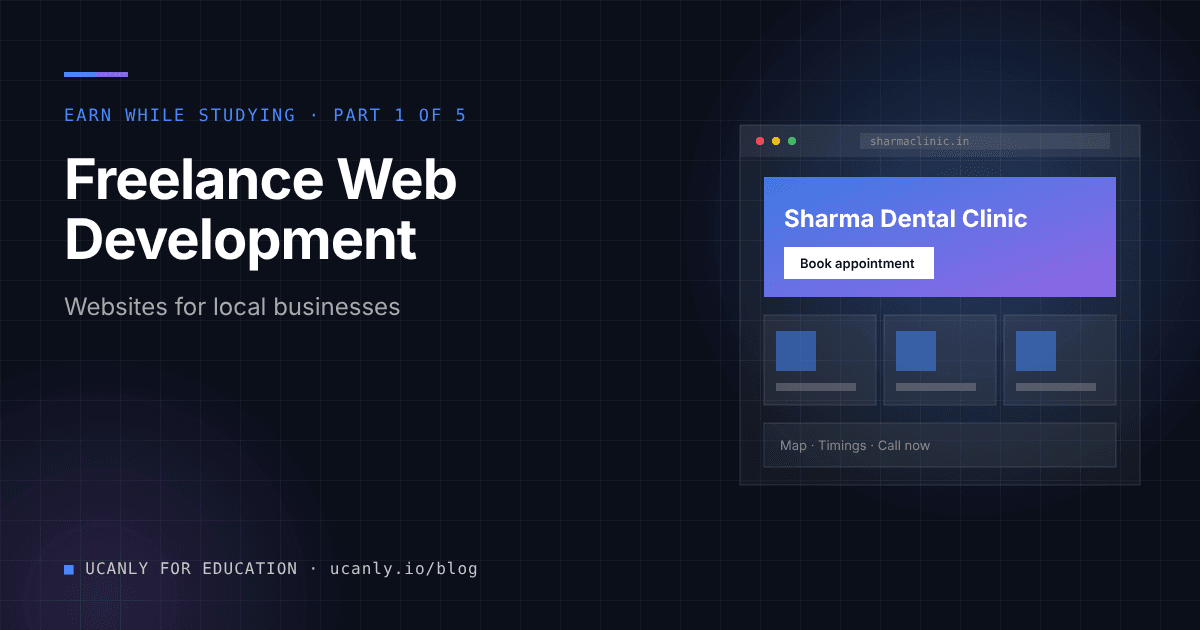
- Build two or three demo sites for fictional businesses in your niche, for example "Sharma Dental Care" or "Bright Future Coaching Classes".
- Make each one mobile responsive, fast loading, and include a working enquiry form.
- Write a short case note for each: the problem, what you built, and the design choices you made.
- Deploy them on free hosting so you can share live links.
Days 16 to 23: Start outreach
- List 30 local businesses in your niche that have weak or missing websites.
- Visit five in person and message the rest using the template below.
- Offer a free audit of their Google listing and website. Audits open doors without pressure.
- Track every conversation in a simple spreadsheet: name, contact, date, status, next step.
Days 24 to 30: Close and deliver
- Send a written proposal to every interested lead.
- Take an advance payment before starting work.
- Deliver your first project, collect feedback, and ask for a testimonial in the client's own words.
- Offer a maintenance plan at handover.
Finding Your First Clients
Local networking
Your strongest early channel is people who already know you. Tell family, relatives, seniors, professors and friends what you do. Many students land their first project through a family doctor, a neighbour's shop, or the coaching centre they once attended. Local business associations and college alumni groups also help.
Online channels
General freelance marketplaces, professional networking sites, and local business groups on messaging apps all work. On marketplaces, competition is high, so niche positioning ("websites for physiotherapy clinics") helps you stand out. Keep an eye on the jobs board for freelance and part time web roles that can add steady work alongside client projects.
Outreach message template
Hello Dr. Rao, I am Ananya, a final year computer science student in your area. I noticed your clinic's Google listing shows old timings and there is no website link. I build simple, mobile friendly websites for clinics with appointment enquiry forms. I would be happy to do a free review of your online presence and share three quick suggestions. Would a 15 minute visit this week work for you?
Keep messages short and specific, and mention one real problem you observed.
How to Price Your Work
Avoid copying numbers from the internet. Build your price using a method.
Step 1: Estimate effort
Break the project into tasks: design, pages, content setup, forms, Google Business Profile, testing, revisions. Estimate hours for each and add a buffer for revisions and client delays.
Step 2: Set your hourly value
Consider your skill level, the quality of your portfolio, what comparable freelancers in your city charge, and the value the site creates for the client. Start modestly while you build proof, then raise your rates after each successful project.
Step 3: Package it
Clients prefer clear packages over hourly billing:
- Starter: single landing page, contact form, Google Business Profile setup
- Standard: five page site, enquiry form, basic SEO, map and WhatsApp integration
- Maintenance retainer: monthly updates, backups, uptime checks, listing updates, small content changes
Proposal outline
1. Understanding of your business and goals
2. Scope: pages, features, integrations
3. What is not included
4. Timeline with milestones
5. Price, payment terms (advance + balance on delivery)
6. Number of revision rounds
7. Domain, hosting and ownership details
8. Maintenance plan option
Always state that the domain and hosting accounts will be in the client's name. This builds trust and avoids disputes later.
Portfolio and Proof Checklist
Before reaching out to paying clients, make sure you have:
- A personal portfolio site with your own domain
- Two or three live demo sites in your niche
- A short case note for each project
- A clean GitHub profile with readable code (for custom builds)
- A sample proposal and audit report you can share
- Before and after screenshots for any real project
- Written testimonials from actual clients, with permission to share
- PageSpeed and mobile responsiveness checks for every site
Mistakes and Scams to Avoid
- Starting without an advance. Always collect a portion upfront.
- Unlimited revisions. Define revision rounds in writing.
- Holding client accounts hostage. Never register domains in your own name for a client. It damages trust and your reputation.
- Using pirated themes or plugins. Nulled premium themes often carry malware and legal risk. Use free or properly licensed tools.
- Overpromising rankings. Never guarantee top Google positions. Promise good practices, not results you cannot control.
- Fake overpayment scams. If a "client" sends extra money and asks you to refund the difference, stop. This is a common fraud pattern.
- "Pay to get projects" schemes. Legitimate clients do not ask you to pay a registration fee to receive work.
Balancing Freelancing With Studies and Placements
Freelancing should strengthen your career, not compete with it.
- Cap your hours. Decide a weekly limit and protect it during exams and placement season.
- Take one project at a time until you have reliable systems.
- Block DSA and aptitude preparation as fixed slots on your calendar. Client work fills other gaps.
- Pause new outreach a month before placements and focus only on retainers.
Basic compliance notes
- Keep records of every invoice, payment and expense.
- Freelance income may be taxable. Understand your obligations and consult a qualified tax professional.
- Check your college rules on part time work and any scholarship conditions.
- Use simple written agreements for every client.
This is general guidance only, not legal or tax advice.
How This Strengthens Your Resume
Freelance web projects are among the strongest proof a fresher can show. Instead of listing "built a to do app", you can write:
Designed and delivered a responsive website for a local dental clinic using Next.js, with an appointment enquiry form and Google Business Profile optimisation. Managed client communication, scope and delivery independently.
That single line demonstrates technical skill, ownership, client handling and real world delivery, which are exactly what interviewers probe for. Run your updated resume through the AI resume review to make sure your freelance work is described with clear impact and the right keywords for frontend and full stack roles.
What to Do Next
- Pick one niche and one build path today.
- Build two demo sites within the next two weeks.
- Create your portfolio, proposal template and outreach message.
- Approach ten local businesses with a free audit offer.
- Deliver your first project carefully, collect a testimonial, and offer maintenance.
- Keep your placement preparation on a fixed schedule throughout.
If you want a structured path that connects freelancing, skill building and placements, start your personalised career roadmap and plan your next semester with clear goals.