If you can explain a technical idea clearly, someone will pay for that ability. Startups need blog posts that rank, SaaS companies need documentation, and founders need LinkedIn posts they have no time to write. As an engineering student, you learn the raw material every week. This guide shows you how to turn that into paid writing work and, more slowly, an audience of your own.
Why technical writing pays better than typical student work
Most student jobs pay for time. Technical writing pays for a rarer combination: real understanding of a technology plus the ability to explain it to a specific reader. Fewer people can do both well, which is why clients value it.
There are four main lanes:
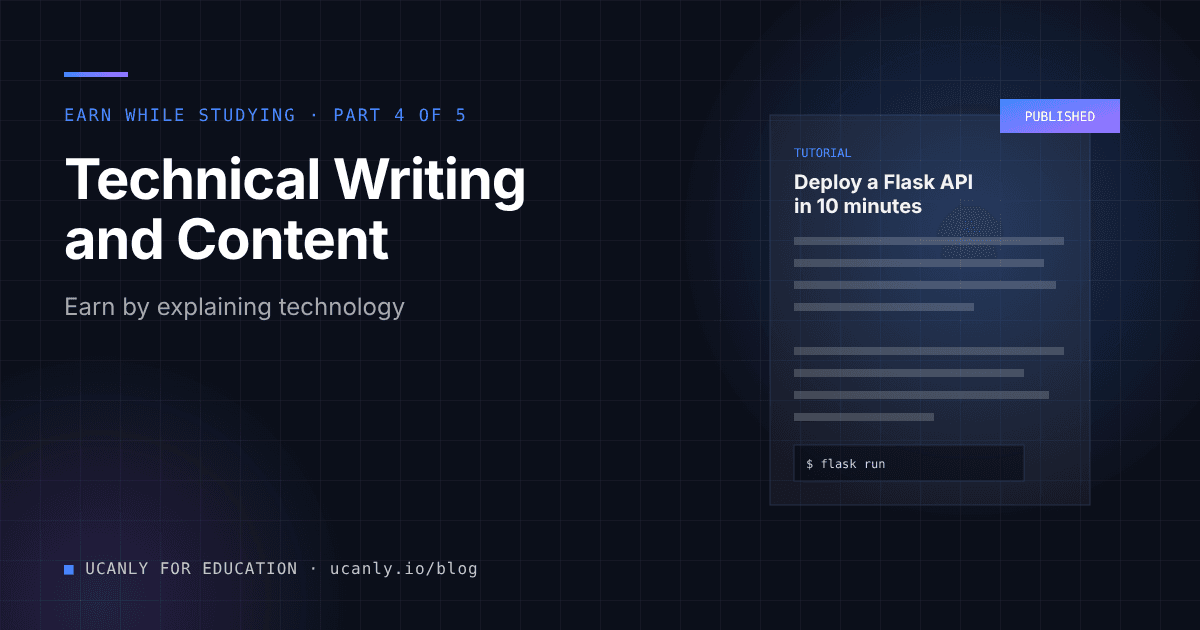
- Client writing (blogs and documentation): tutorials, API guides, onboarding docs and release notes for startups and SaaS companies. The fastest route to paid work.
- LinkedIn ghostwriting for founders: turning a founder's ideas and calls into posts in their voice.
- Video explainers (YouTube, Instagram): scripting short tech explainers for brands, creators, or your own channel.
- Newsletters: writing one for a company, or growing your own around a niche such as DSA prep or AI tools.
Skills you need (and how to build them)
You do not need to be a senior engineer. You need enough depth to be accurate and enough clarity to be useful.
Core skills
- Technical accuracy: You must be able to run the code you write about. Every snippet in a tutorial should work.
- Structured writing: Clear headings, short paragraphs, one idea per section, and an obvious takeaway.
- Audience awareness: A beginner tutorial and an architecture explainer read very differently.
- Research discipline and basic SEO: Reading official docs, testing claims, and answering one search question well.
Using AI tools responsibly
ChatGPT, Claude and Gemini can help you outline and test explanations, but clients notice generic output instantly. Use them as a reviewer:
Here is my draft explanation of database indexing for final year students. Point out any step where a beginner would get confused, and list any technical claims I should verify against official documentation.
Many clients now ask about your AI policy, so have an honest answer ready.
If your fundamentals feel shaky in a topic you want to write about, close that gap first through structured courses. Writing about something you half understand is the fastest way to lose a client.
A 30 day start plan
Days 1 to 7: pick a niche and set up
- Choose one lane (client blogs, documentation, ghostwriting, or video scripts) and one topic area you know, such as Python, web development, DSA, cloud, or AI tools.
- Study ten strong technical blogs or docs sites in that area.
- Set up a simple portfolio: a free blogging platform, a GitHub repository with Markdown files, or a basic personal site.
- Write a short bio: who you are, what you write about, and what kind of reader you help.
Days 8 to 18: create three portfolio pieces
- One tutorial: "Build X with Y", with working code in a linked repository.
- One explainer: a concept like "How JWT authentication works" written for a defined reader.
- One format sample for your lane: a documentation page for an open source tool, five LinkedIn posts written in a sample founder voice, or a 60 second explainer script.
Edit each piece twice and ask a friend from another branch where they got lost.
Days 19 to 25: start outreach
- Build a list of 30 targets: early stage startups, developer tool companies, edtech brands, and founders who post actively but irregularly.
- Send five personalised pitches per day using the templates below.
- Publish one post on LinkedIn about something you learned while writing a portfolio piece.
Days 26 to 30: review and adjust
- Track replies in a simple sheet: name, date, pitch angle, response.
- Rewrite your pitch if you have no replies after 20 to 25 sends.
- Write one more portfolio piece aimed at the type of client who responded most.
Finding your first clients
Where to look
- Freelance marketplaces: Competition is heavy, so a specialised profile ("Python and API tutorials") beats a generic "content writer".
- Remote job boards and startup job listings: Search for "technical writer", "developer advocate content" or "documentation contributor". Our jobs board is a good place to watch for content and internship roles.
- Company "write for us" programmes: Some developer focused companies run paid community writing programmes. Search for them directly and read their guidelines carefully.
- Your network: Seniors at startups, alumni founders, college incubators, and local tech meetups are underrated sources.
Pitch template for a startup blog or docs
Subject: Tutorial idea for [Product] users: [specific topic]

Hi [Name],

I am a [year] [branch] student who writes technical tutorials on [area].
I noticed your docs cover [feature] but there is no step by step guide
for [specific use case]. I would like to write one.

Proposed outline:
1. The problem the reader is solving
2. Setup and prerequisites
3. Building it step by step with working code
4. Common errors and fixes

Samples: [link 1], [link 2]
Happy to do a short paid trial piece if that helps.

Regards,
[Name]
Pitch template for founder ghostwriting
Hi [Name],

I read your posts on [topic]. Your comments section shows people want
more of your thinking on [theme], but you post irregularly.

I help founders turn calls and notes into consistent posts in their
own voice. I wrote three sample drafts based on your public talks:
[link]. If they feel close to how you speak, I would be glad to discuss
a small monthly trial.

[Name]
Pitching editors works the same way: a specific idea, relevant samples, and brevity. Do not send full unsolicited articles unless guidelines ask.
Pricing your work, and the truth about audience income
A pricing method
Avoid copying a rate from a forum post. Build your own pricing method:
- Estimate real hours. A tested tutorial includes research, coding, writing, screenshots and edits. Track your hours on portfolio pieces so your estimate is grounded.
- Decide your hourly floor. The minimum you need for the work to be worth your study time.
- Price per deliverable, not per word, when possible. A 1,500 word tutorial with working code is worth more than 1,500 words of opinion. Per piece pricing rewards quality.
- Add complexity factors. Tested code, interviews, diagrams, or rush deadlines justify a higher quote.
- Use retainers for ongoing work. Ghostwriting and newsletters suit a fixed monthly scope.
- Raise rates as proof grows. Revisit pricing for new clients after every few good projects.
Earnings depend on your skill, niche, and the effort you put into pitching. Be wary of anyone promising a fixed income from writing.
Simple proposal outline
- Goal of the piece and target reader
- Outline with headings
- Deliverables: word range, code repository, diagrams, revisions
- Timeline and review process
- Price, payment terms, and advance amount for first projects
The honest truth about audience based income
Your own channel, page or newsletter grows slowly. Most creators publish for a long time before seeing meaningful views or sponsor interest, and many good channels never take off.
Treat your own audience as a long term asset and a portfolio, not as your main income source while studying. Practical rules:
- Earn from client work first; build the audience alongside it.
- Pick a schedule you can keep through exams.
- Use your content as proof when pitching clients. A consistent explainer series shows editors you can deliver.
Proof, pitfalls and compliance
Portfolio and proof checklist
- Three to five published samples in your chosen niche
- At least one tutorial with a working GitHub repository
- A documentation sample (open source contribution or a mock docs page)
- Format samples for your lane: LinkedIn drafts, video scripts, or a newsletter issue
- A one paragraph bio and a clear niche statement
- Client feedback or editor acceptance emails saved, with permission to reference them
- A clean LinkedIn profile that matches your portfolio
Mistakes and scams to avoid
- Unpaid "test articles" that are actually full assignments. A fair trial is short, paid, or clearly limited in scope.
- Requests to pay a fee for "registration" or "training" before getting writing work. Legitimate clients do not charge you to work for them.
- Plagiarism and spun content. It can end your reputation quickly. Always write original work and cite sources.
- Unclear scope. Agree on word range, revisions and deadline in writing.
- Publishing client work as your own without permission. Ghostwriting usually means you cannot claim credit publicly. Ask what you may show in your portfolio.
- Taking large projects without any advance. For new clients, ask for partial payment upfront.
Compliance basics
This is general guidance, not legal or tax advice:
- Keep records of every invoice, payment, and contract or email agreement.
- Freelance income may be taxable. Understand your obligations and consult a qualified professional if you are unsure.
- Check your college rules on outside work, especially if you hold a scholarship or a hostel agreement with conditions.
- Respect confidentiality of client drafts and internal details.
Balancing studies, placements and your resume
- Cap your weekly writing hours, and cut back further during exams and placement season.
- Choose topics that overlap with what you are studying. Writing about DSA patterns or system design basics doubles as interview preparation.
- Say no to rush deadlines that clash with internals or interviews.
Use a personal career roadmap to plan when to take on more clients and when to focus fully on placements.
Published tutorials, documentation contributions and accurately stated client outcomes give recruiters public evidence that you communicate clearly. It also opens doors to roles like developer advocate, technical writer and product marketing. Run your updated resume through our AI resume review to make sure your writing work reads as professional experience.
What to do next
Pick one lane and one niche this week. Write three strong portfolio pieces in the next two weeks, then send five specific pitches a day. Price by deliverable using your real hours, protect yourself with clear scope and advances, and build your own audience slowly on the side. Treat every piece you publish as both income and proof, and let it carry you into internships and placements with a stronger story.